First Shailaputri, second Brahmacharini, third Chandraghanta, fourth Kushmanda; fifth Skandamata, sixth Katyayani, seventh Kalaratri, eighth Mahagauri; ninth Siddhidatri: these are proclaimed the nine Durgas. (Devi Kavacham 3–5)
The dates below are worked out tithi by tithi, so a Navratri can have eight days or ten when a tithi is lost or repeated; the
day each form falls on is the day her tithi is current at sunrise. Each verse is the dhyana shloka families recite for that form; these
are devotional verses of later composition, not verses of the Devi Mahatmya itself. The cards are free to save and share, one each morning.
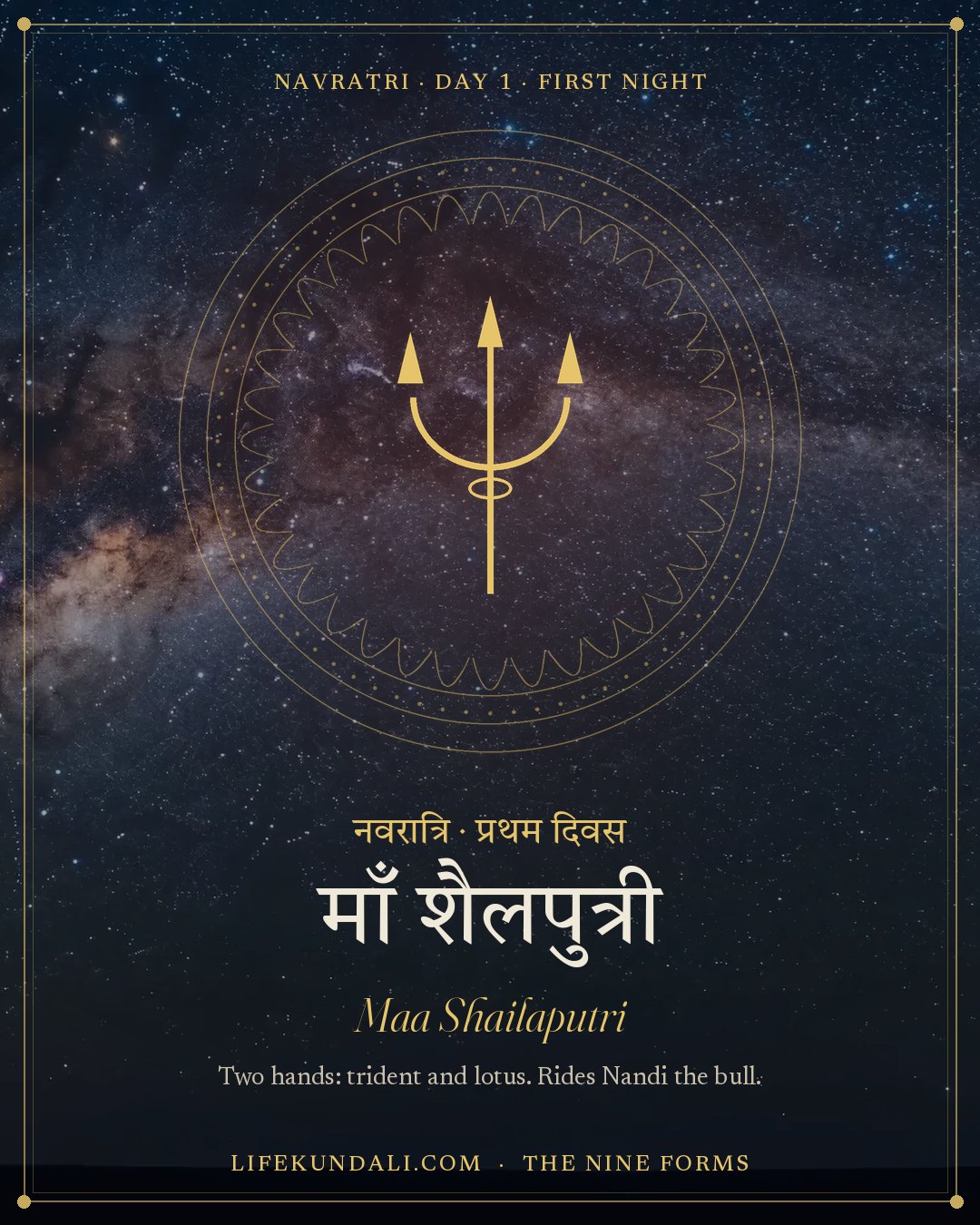
I bow to the glorious Shailaputri, the half-moon on her crown, riding the bull, holding the trident, for the gaining of what is wished.मनोवांछित लाभ के लिए, अर्धचंद्र-मुकुट धारिणी, वृष पर आरूढ़, त्रिशूलधारी, यशस्विनी शैलपुत्री को मैं नमन करता हूँ।
How she is shown. Two hands: trident and lotus. Rides Nandi the bull.
The daughter (putri) of the mountain (shaila), Himavan. She is Sati reborn: after Sati gave up her body in the fire of her father Daksha's yajna, she was born again to Himavan and Mena as Parvati, to be united with Shiva once more. The first day honours this beginning: the Goddess taking form in the world.
पर्वत (शैल) हिमवान की पुत्री। वे पुनर्जन्म ली हुई सती हैं: पिता दक्ष के यज्ञ की अग्नि में देह त्यागने के बाद सती हिमवान और मेना के घर पार्वती रूप में जन्मीं, ताकि फिर शिव से मिलें। पहला दिन इसी आरंभ का सम्मान है।
Source: Shiva Purana, Rudra Samhita (Sati and Parvati khandas); the form-name from Devi Kavacham 3
Day 2 · Thu 8 Apr in India
माँ ब्रह्मचारिणी · Maa Brahmacharini
दधाना करपद्माभ्यामक्षमालाकमण्डलू। देवी प्रसीदतु मयि ब्रह्मचारिण्यनुत्तमा॥
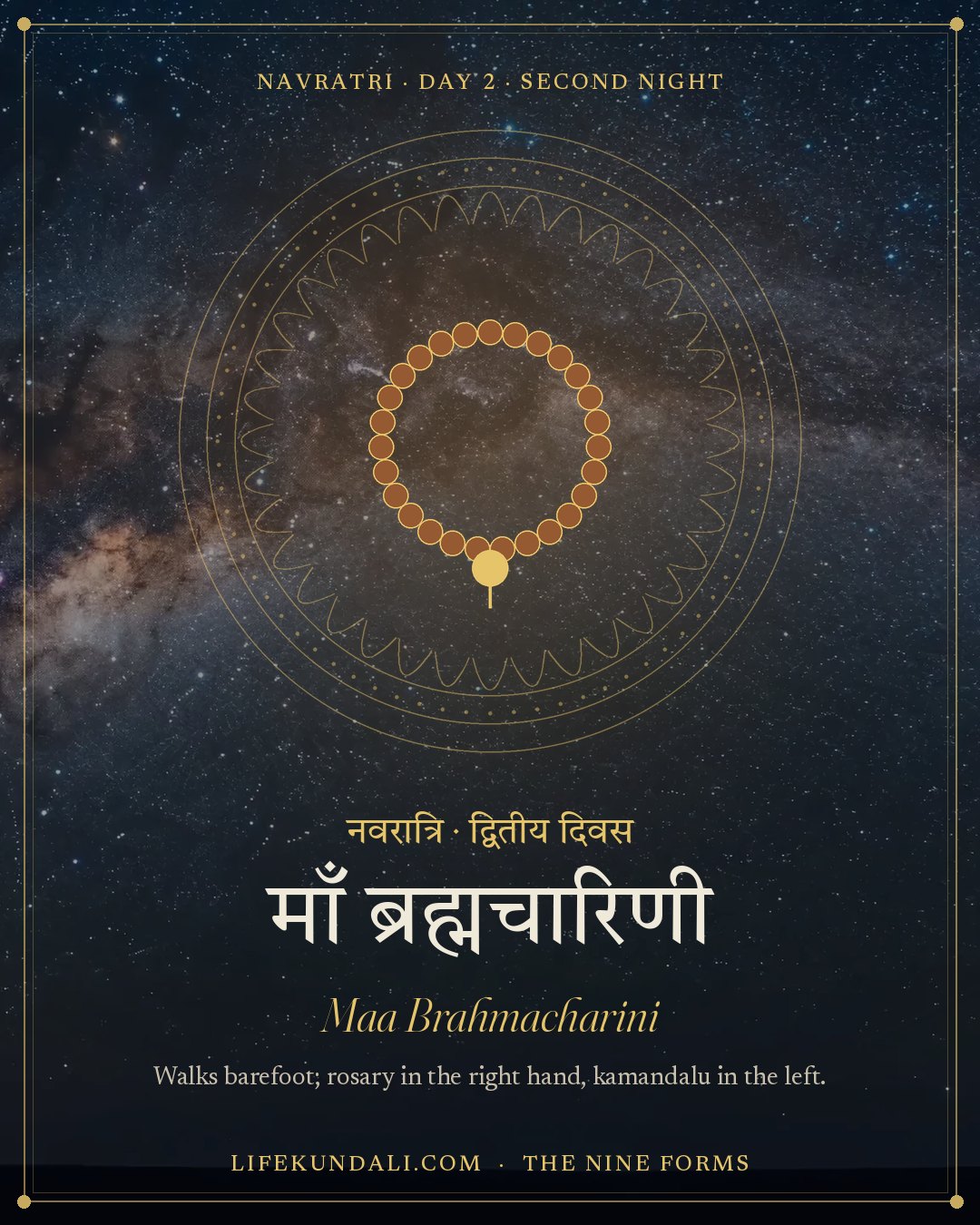
May the incomparable Goddess Brahmacharini, holding a rosary and a water-pot in her lotus hands, be gracious to me.करकमलों में अक्षमाला और कमण्डलु धारण करने वाली अनुपम देवी ब्रह्मचारिणी मुझ पर प्रसन्न हों।
How she is shown. Walks barefoot; rosary in the right hand, kamandalu in the left.
Parvati in her years of tapas. Resolved to have Shiva, she left the palace and practised austerities so severe that she gave up even eating leaves, and was called Aparna, 'without even a leaf'. Shiva, testing her in disguise, mocked himself to her; she would not hear it. The day honours resolve held without wavering.
तपस्या के वर्षों में पार्वती। शिव को पाने के संकल्प से उन्होंने महल छोड़ा और इतना कठोर तप किया कि पत्ते खाना भी छोड़ दिया, इसलिए 'अपर्णा' कहलाईं। शिव ने वेश बदलकर परीक्षा ली और अपनी ही निंदा की; उन्होंने एक न सुनी। यह दिन अडिग संकल्प का सम्मान है।
Source: Shiva Purana, Rudra Samhita, Parvati khanda (the tapas of Parvati); Kumarasambhava canto 5 tells the same story
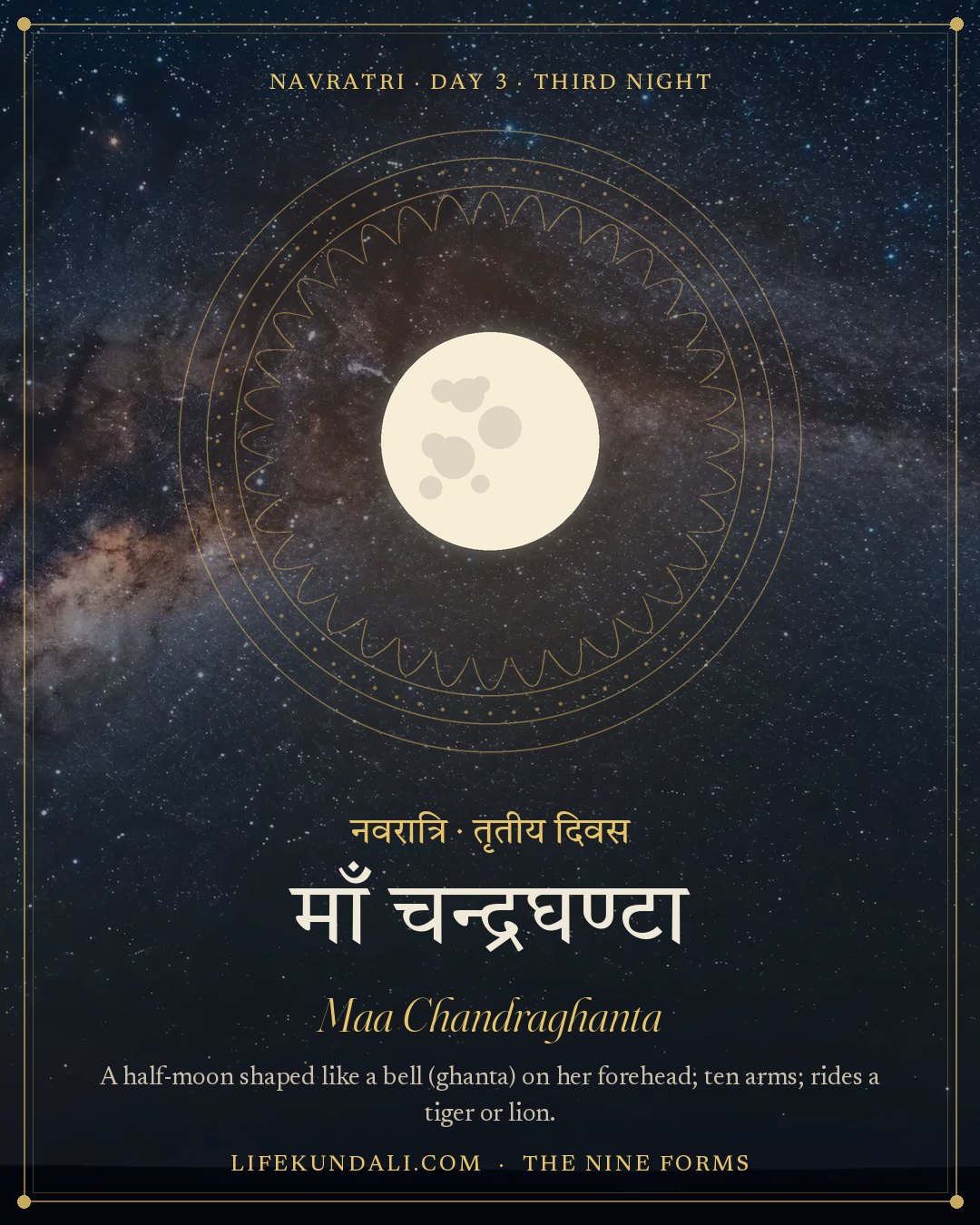
She who rides the finest of beasts, armed with weapons of fierce wrath, renowned as Chandraghanta: may she extend her grace to me.श्रेष्ठ वाहन पर आरूढ़, प्रचण्ड अस्त्रों से युक्त, चन्द्रघण्टा नाम से विख्यात देवी मुझ पर कृपा करें।
How she is shown. A half-moon shaped like a bell (ghanta) on her forehead; ten arms; rides a tiger or lion.
In the telling of devotional tradition, she is Parvati at her wedding: when Shiva came with his fearsome procession of ganas and ghosts, she took this radiant, armed form so that the wedding could go ahead in peace. The sound of her bell is said to drive fear away. The day is for courage that stays calm.
भक्ति-परंपरा के अनुसार यह विवाह के समय की पार्वती हैं: जब शिव अपने भयावह गणों और भूतों की बारात लेकर आए, तब उन्होंने यह तेजस्वी, शस्त्रधारी रूप धारण किया ताकि विवाह शांति से हो सके। कहते हैं उनकी घंटी का नाद भय को दूर भगाता है।
Source: Devotional tradition (the Navadurga dhyanas); the form-name from Devi Kavacham 3
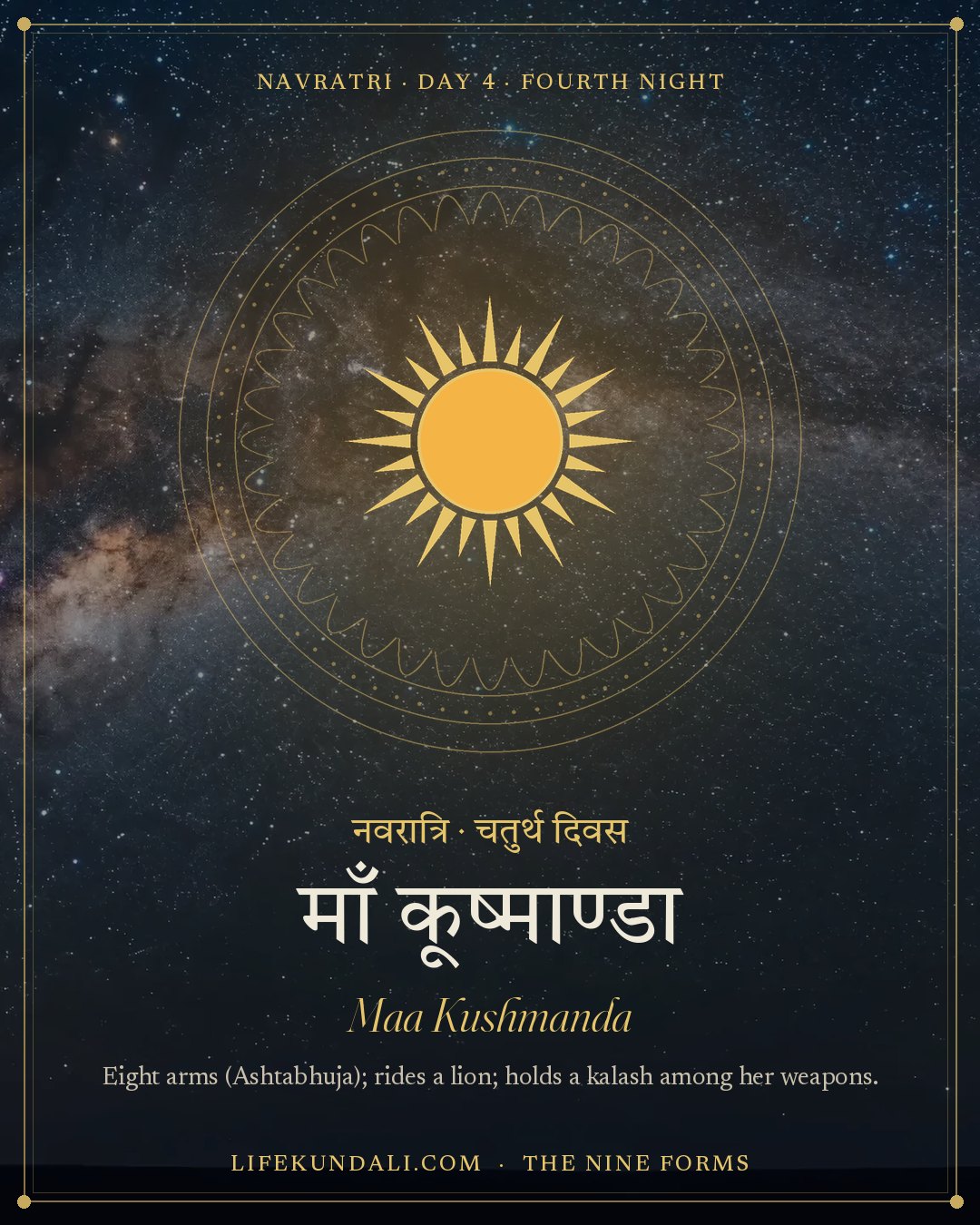
Holding in her lotus hands a pot full of nectar and one brimming with blood, may Kushmanda be auspicious to me.करकमलों में अमृत से भरा और रक्त से भरा कलश धारण करने वाली कूष्माण्डा मेरे लिए शुभ हों।
How she is shown. Eight arms (Ashtabhuja); rides a lion; holds a kalash among her weapons.
When there was nothing, only darkness, she smiled, and from that 'little (ku) warm (ushma) egg (anda)' of her smile the universe began. She is said to dwell in the core of the sun and to give it its light. The day honours creation itself.
जब कुछ नहीं था, केवल अंधकार था, तब वे मुस्कुराईं, और उनकी मुस्कान के 'छोटे (कु) ऊष्म (ऊष्मा) अंड' से ब्रह्मांड आरंभ हुआ। कहा जाता है वे सूर्य के भीतर निवास करती हैं और उसे प्रकाश देती हैं। यह दिन सृष्टि का सम्मान है।
Source: Devotional tradition (folk etymology of the name); the form-name from Devi Kavacham 3
Day 5 · Sun 11 Apr in India
माँ स्कन्दमाता · Maa Skandamata
सिंहासनगता नित्यं पद्माश्रितकरद्वया। शुभदास्तु सदा देवी स्कन्दमाता यशस्विनी॥
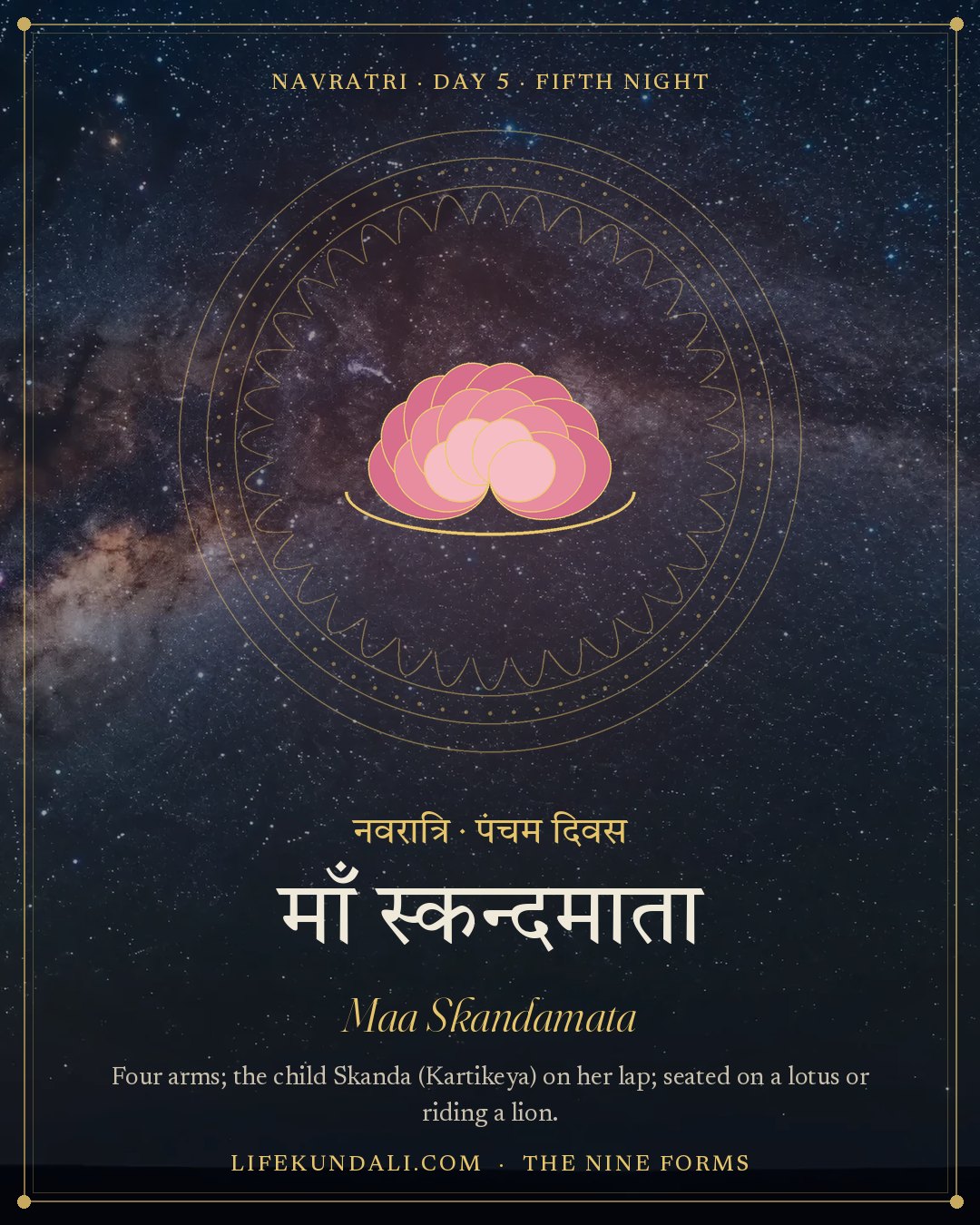
Ever seated on the lion, two hands holding lotuses: may the glorious Goddess Skandamata always be auspicious.सदा सिंह पर आसीन, दो हाथों में कमल धारण करने वाली यशस्विनी देवी स्कन्दमाता सदा शुभ करें।
How she is shown. Four arms; the child Skanda (Kartikeya) on her lap; seated on a lotus or riding a lion.
The mother of Skanda, Kartikeya, the commander of the gods, born to defeat the demon Taraka whom only a son of Shiva could slay. She is worshipped with her child, and the day is for the mother's love that is also strength.
देवसेनापति स्कन्द (कार्तिकेय) की माता, जिनका जन्म उस तारकासुर के वध के लिए हुआ जिसे केवल शिव-पुत्र मार सकता था। उनकी पूजा पुत्र सहित होती है; यह दिन उस मातृ-प्रेम का है जो शक्ति भी है।
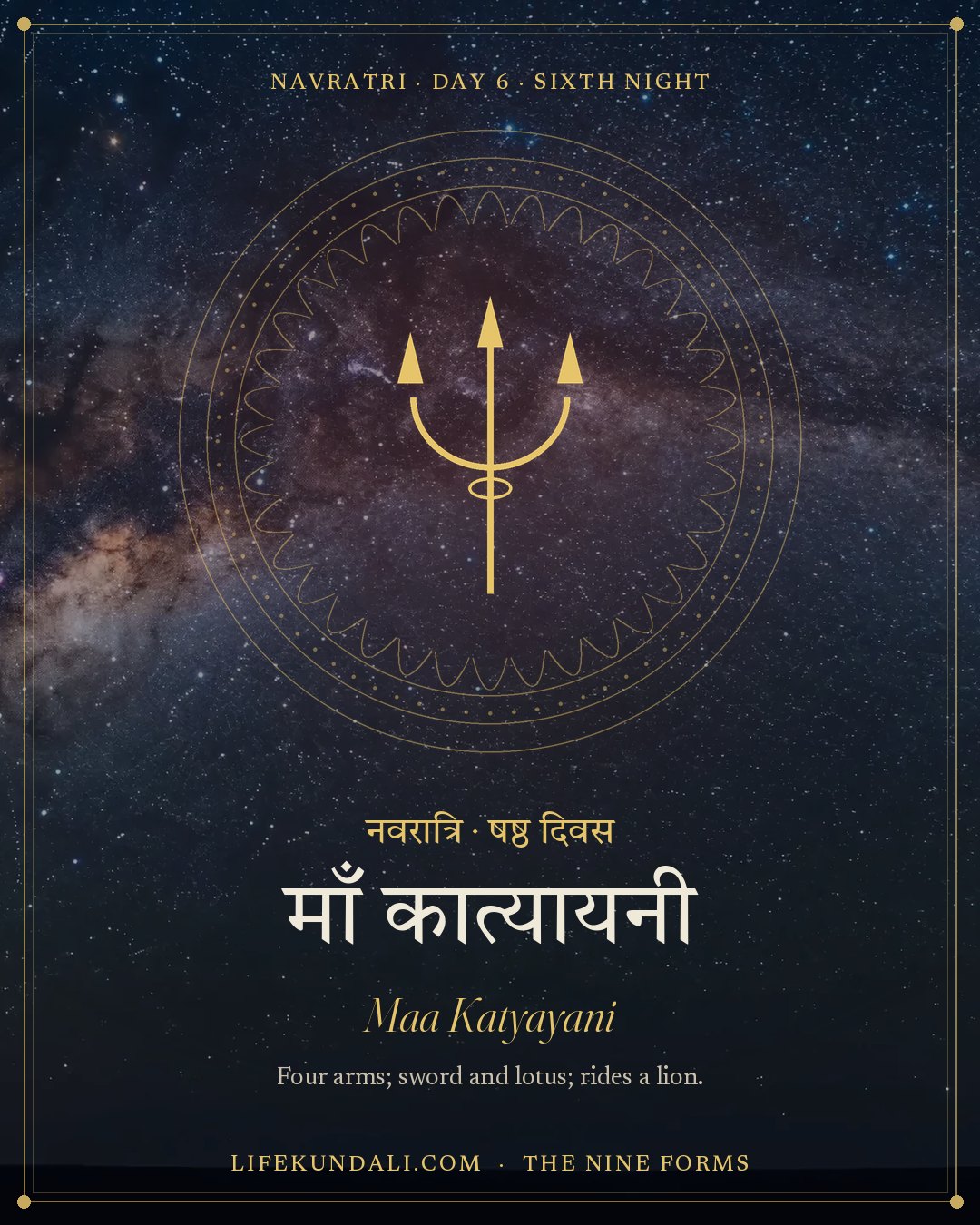
Her hand bright with the Chandrahasa sword, riding the noble tiger: may Katyayani, slayer of demons, grant what is good.चन्द्रहास खड्ग से दीप्त हाथ वाली, श्रेष्ठ शार्दूल पर सवार, दानवों का संहार करने वाली देवी कात्यायनी शुभ प्रदान करें।
How she is shown. Four arms; sword and lotus; rides a lion.
Born in the ashram of the sage Katyayana, who prayed that the Goddess be his daughter, she took the form that slew the buffalo-demon Mahishasura. In the Bhagavata, the young gopis of Vraja keep a month-long vow to Katyayani, praying for Krishna as their husband; it is why she is prayed to for marriage.
ऋषि कात्यायन के आश्रम में जन्मीं, जिन्होंने देवी को पुत्री रूप में पाने का तप किया था; इसी रूप ने महिषासुर का वध किया। भागवत में व्रज की गोपियाँ कृष्ण को पति रूप में पाने के लिए एक मास का कात्यायनी व्रत करती हैं; इसीलिए विवाह के लिए उनकी प्रार्थना होती है।
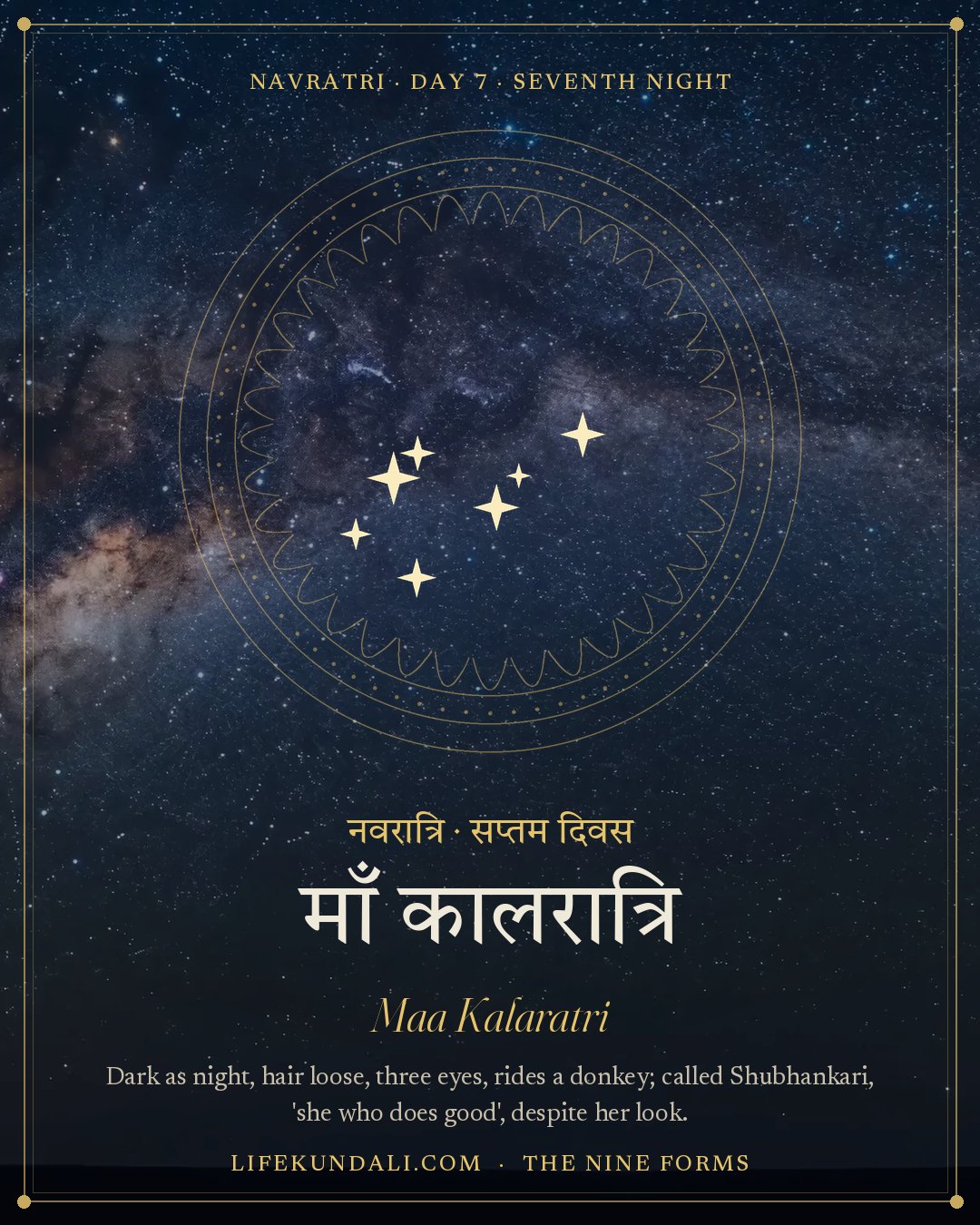
Single-braided, hibiscus at her ears, unclothed, riding a donkey, dark, her body glistening with oil, an iron thorn-ornament on her left foot: Kalaratri, the terrifying.एक वेणी वाली, कानों में जपा-पुष्प, नग्न, गधे पर सवार, तेल से चमकती देह, बाएँ पैर में लोहे का कंटक-आभूषण: भयंकरी कालरात्रि।
How she is shown. Dark as night, hair loose, three eyes, rides a donkey; called Shubhankari, 'she who does good', despite her look.
The darkest and fiercest form, the night that destroys darkness. In the Devi Mahatmya the Goddess takes such a form, Kali or Chamunda, to defeat the demon Raktabija, from every drop of whose blood a new demon rose: she drank the blood before it touched the ground. The day is for facing what frightens us.
सबसे श्याम और उग्र रूप, वह रात्रि जो अंधकार का नाश करती है। देवी माहात्म्य में देवी ऐसा ही रूप (काली या चामुण्डा) रक्तबीज के वध के लिए धारण करती हैं, जिसके रक्त की हर बूँद से नया दैत्य जन्म लेता था: रक्त भूमि छूने से पहले ही उन्होंने उसे पी लिया। यह दिन डर का सामना करने का है।
Source: Devi Mahatmya chapter 8 (Raktabija); the name Kalaratri appears in Devi Mahatmya 1.78 (Brahma's hymn)
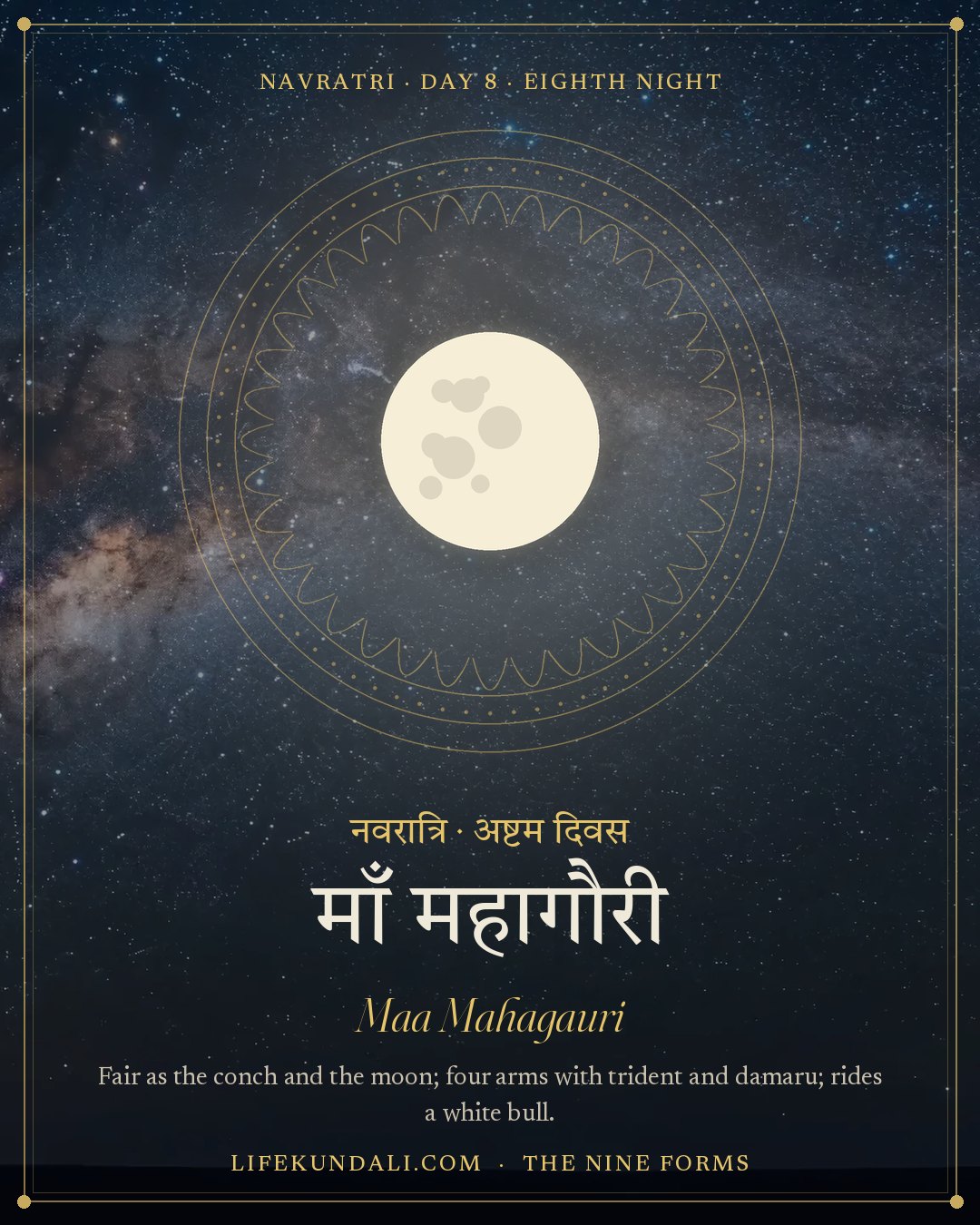
Day 8 · Wed 14 Apr in India · Tue 13 Apr in Brampton
Riding a white bull, clad in white, pure, the delight of Mahadeva: may Mahagauri grant what is good.श्वेत वृष पर आरूढ़, श्वेत वस्त्रधारिणी, पवित्र, महादेव को आनंद देने वाली महागौरी शुभ प्रदान करें।
How she is shown. Fair as the conch and the moon; four arms with trident and damaru; rides a white bull.
After her long tapas in sun and dust, Parvati's body had grown dark; when Shiva accepted her, he bathed her in the waters of the Ganga and she shone white: Mahagauri, 'the greatly fair'. Many families hold Kanya Pujan on her day, the Ashtami.
लंबी तपस्या में धूप और धूल से पार्वती का शरीर श्याम हो गया था; जब शिव ने उन्हें स्वीकार किया, तो गंगाजल से स्नान कराया और वे उज्ज्वल हो उठीं: महागौरी। कई परिवार उनके दिन, अष्टमी, को कन्या पूजन करते हैं।
Source: Devotional tradition; the name Gauri for Parvati throughout the Puranas; the form-name from Devi Kavacham 4
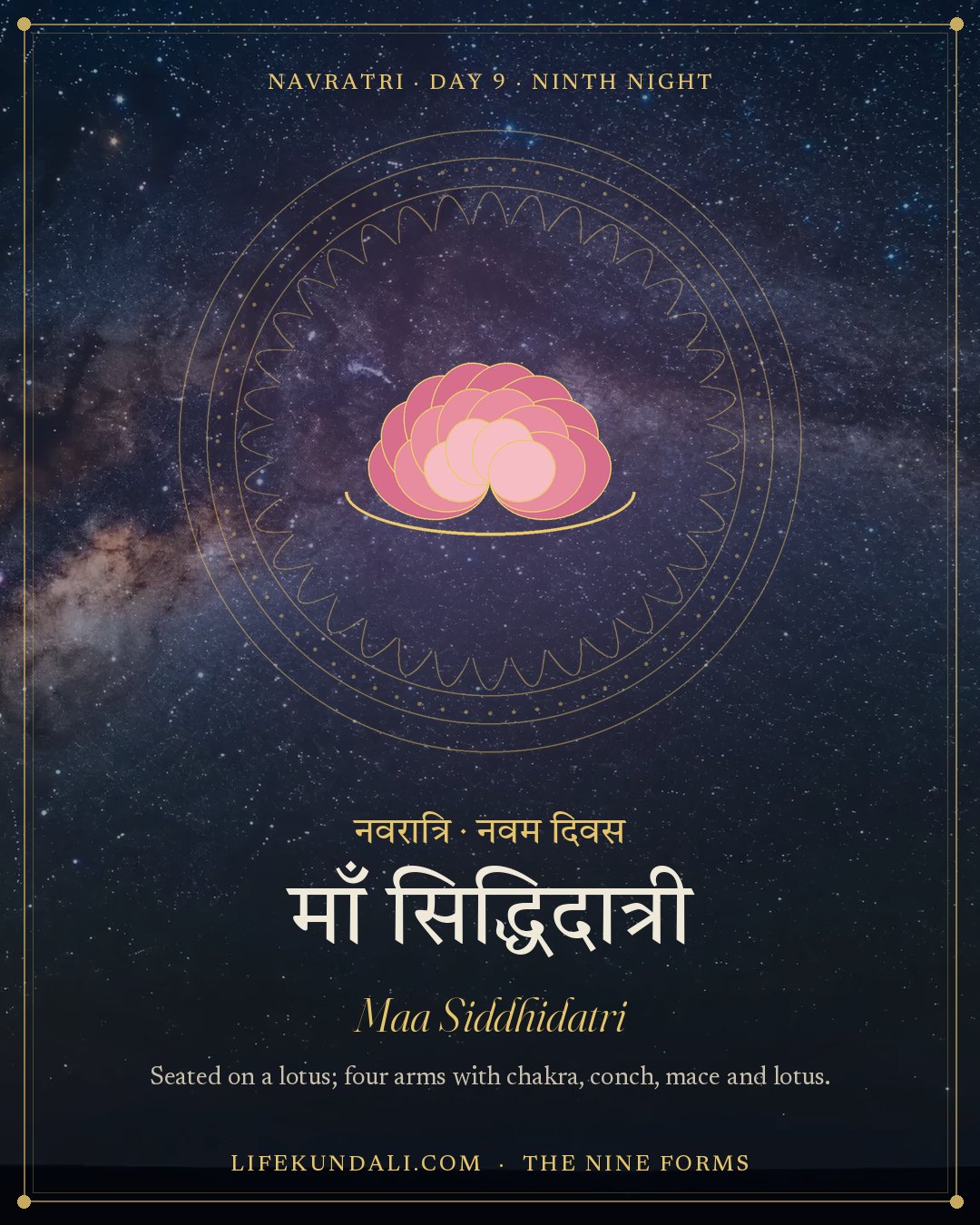
Day 9 · Thu 15 Apr in India · Wed 14 Apr in Brampton
माँ सिद्धिदात्री · Maa Siddhidatri
सिद्धगन्धर्वयक्षाद्यैरसुरैरमरैरपि। सेव्यमाना सदा भूयात् सिद्धिदा सिद्धिदायिनी॥
Served always by siddhas, gandharvas, yakshas, by asuras and the gods alike: may the giver of siddhis be with me.सिद्धों, गन्धर्वों, यक्षों, असुरों और देवताओं से सदा सेवित, सिद्धियाँ देने वाली देवी सदा कृपा करें।
How she is shown. Seated on a lotus; four arms with chakra, conch, mace and lotus.
The giver of perfection (siddhi). Tradition says Shiva himself received his siddhis through her, and that by her grace half his body became hers: Ardhanarishvara, the Lord who is half woman. The ninth day closes the nine nights with the havan and with Kanya Pujan where it was not done on Ashtami.
सिद्धि प्रदान करने वाली। परंपरा कहती है कि स्वयं शिव ने उन्हीं की कृपा से सिद्धियाँ पाईं, और उनका आधा शरीर देवी का हो गया: अर्धनारीश्वर। नवमी हवन से और, जहाँ अष्टमी को न हुआ हो, कन्या पूजन से नौ रातों का समापन करती है।
Source: Devotional tradition (the Navadurga dhyanas); Ardhanarishvara in the Shiva Purana; the form-name from Devi Kavacham 5
On the nine colours: the custom of a set colour for each day of Navratri began in Maharashtra in the early 2000s and
changes year to year. It is a lovely modern custom, not a scriptural one, so we do not print a list as if it were.
What to do on the day · इस दिन क्या करें
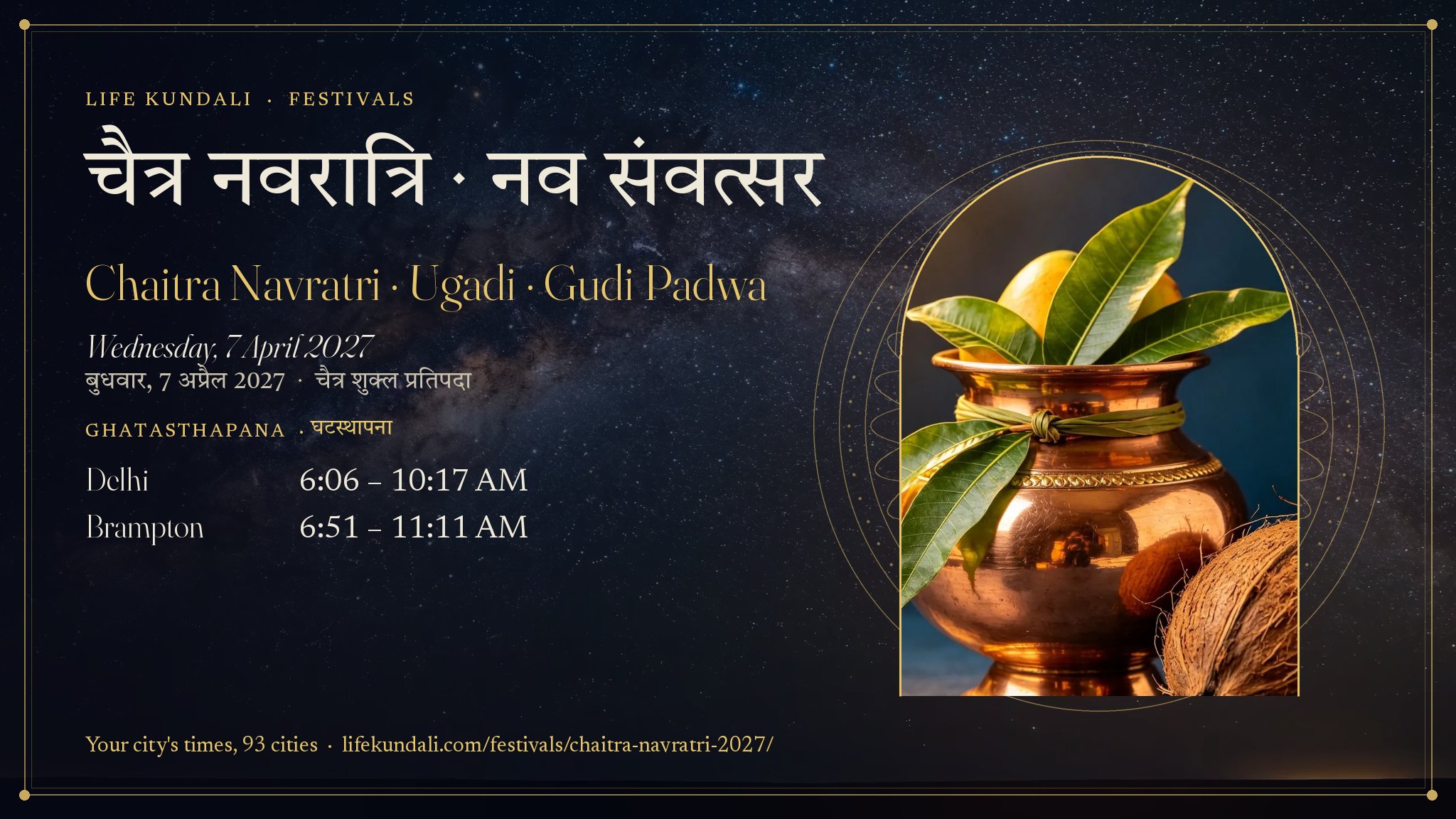
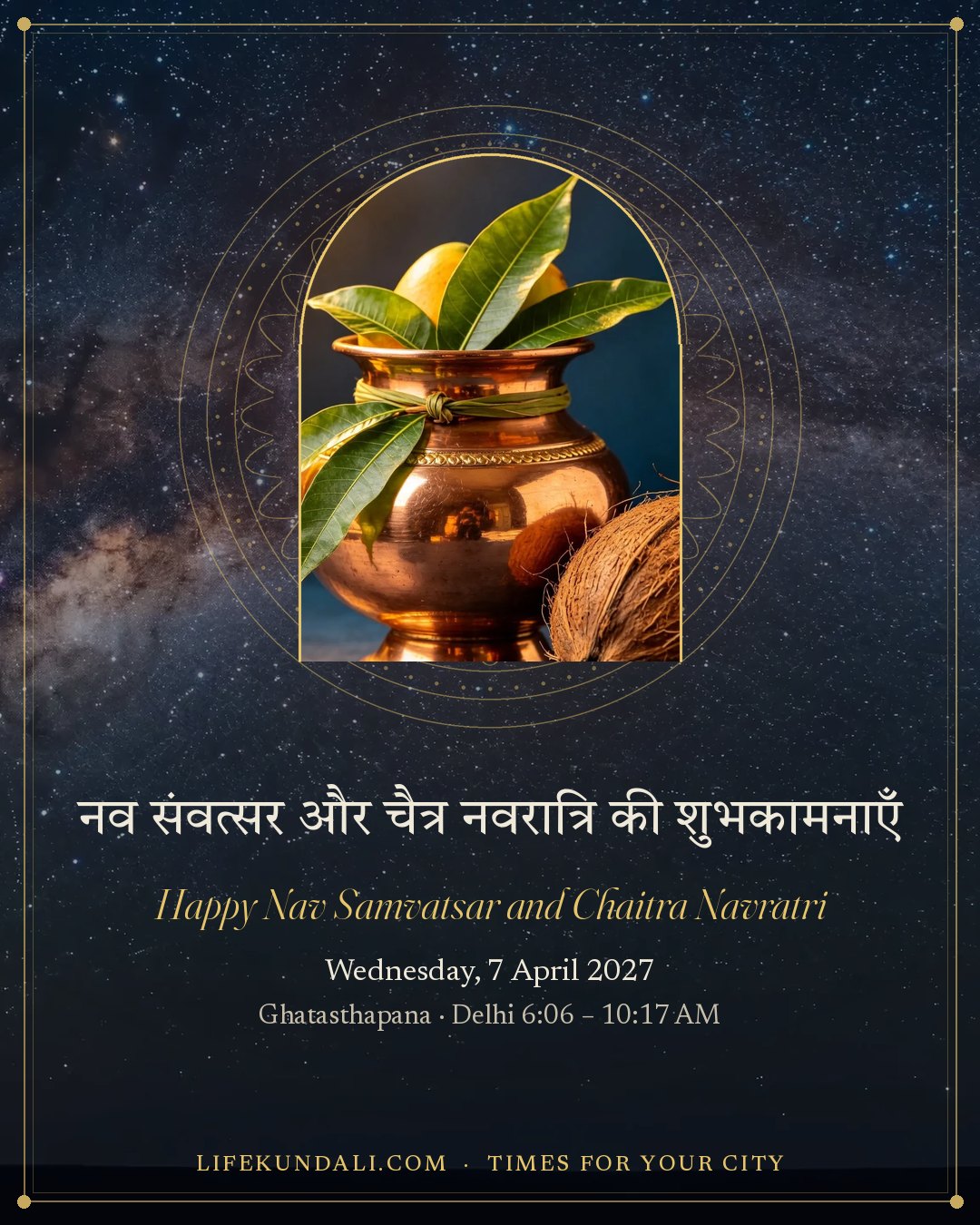
Ghatasthapana inside the morning muhurat, as in Sharad Navratri.शारदीय नवरात्रि की तरह प्रातः मुहूर्त में घटस्थापना।
Hear or read the new year's panchang phal (the samvat reading) with the family.परिवार के साथ नव संवत्सर का पंचांग-फल सुनें या पढ़ें।
Raise the Gudi or decorate the door with mango leaves, as your region keeps it.अपने क्षेत्र की परंपरा से गुड़ी लगाएँ या द्वार पर आम के पत्तों की वंदनवार।
Eat neem with jaggery: the year's bitter and sweet taken together.नीम और गुड़ साथ खाएँ — वर्ष का कड़वा-मीठा एक साथ।
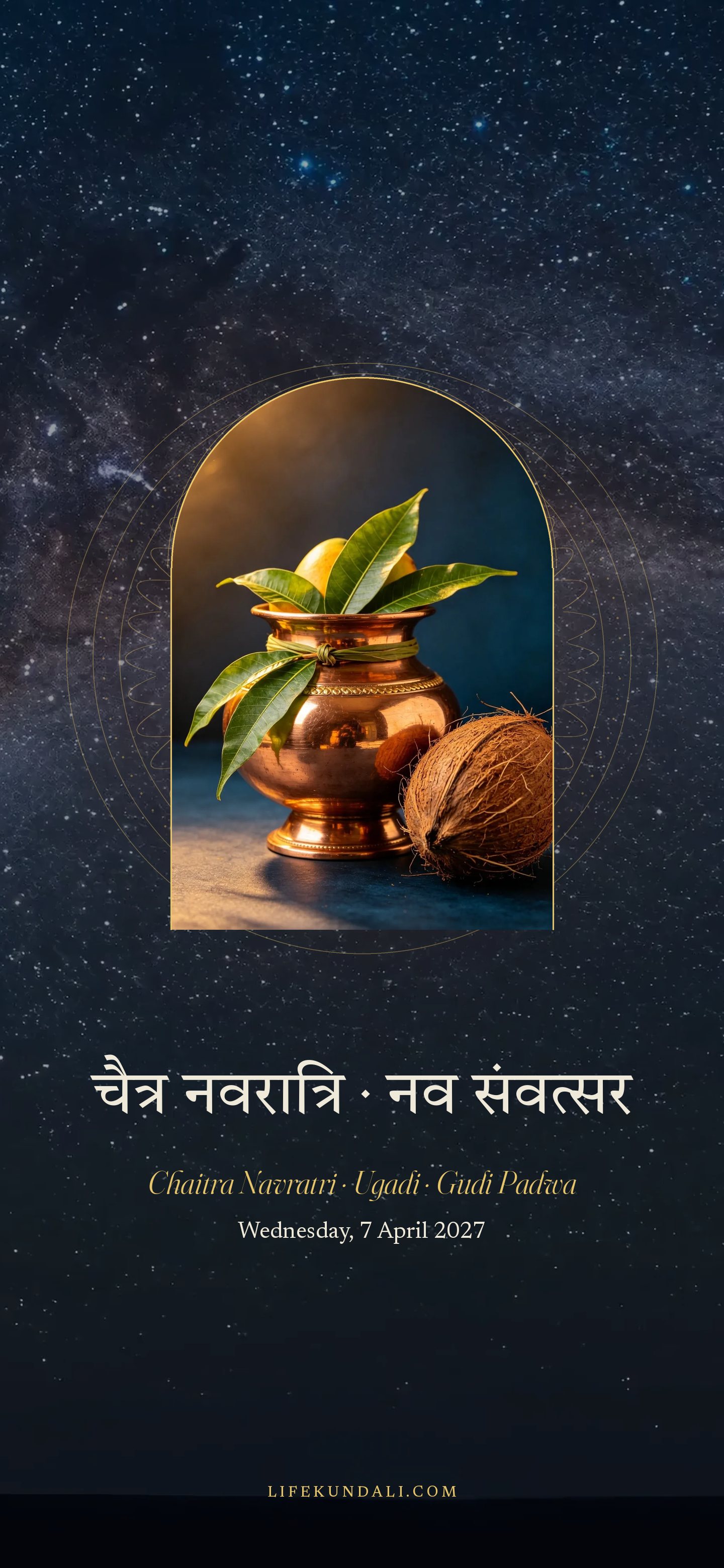
Greeting card, poster and wallpaper · शुभकामना कार्ड
Free to share with family and friends. Long-press on a phone, or click to open and save.
How the day and time were found: Ghatasthapana is done in the first third of the day while Pratipada runs; if that is missed, in Abhijit muhurat at midday. Every time is local, from that city's own sunrise, sunset or moonrise
(Swiss Ephemeris, Lahiri ayanamsa). Printed almanacs can differ by a few minutes, and where a tithi straddles sunrise, by a day.
If your temple or family keeps a different time, follow them.